How To Choose A Shockwave Clinic: 7 Questions To Ask
By Jared Croskey • November 9, 2026

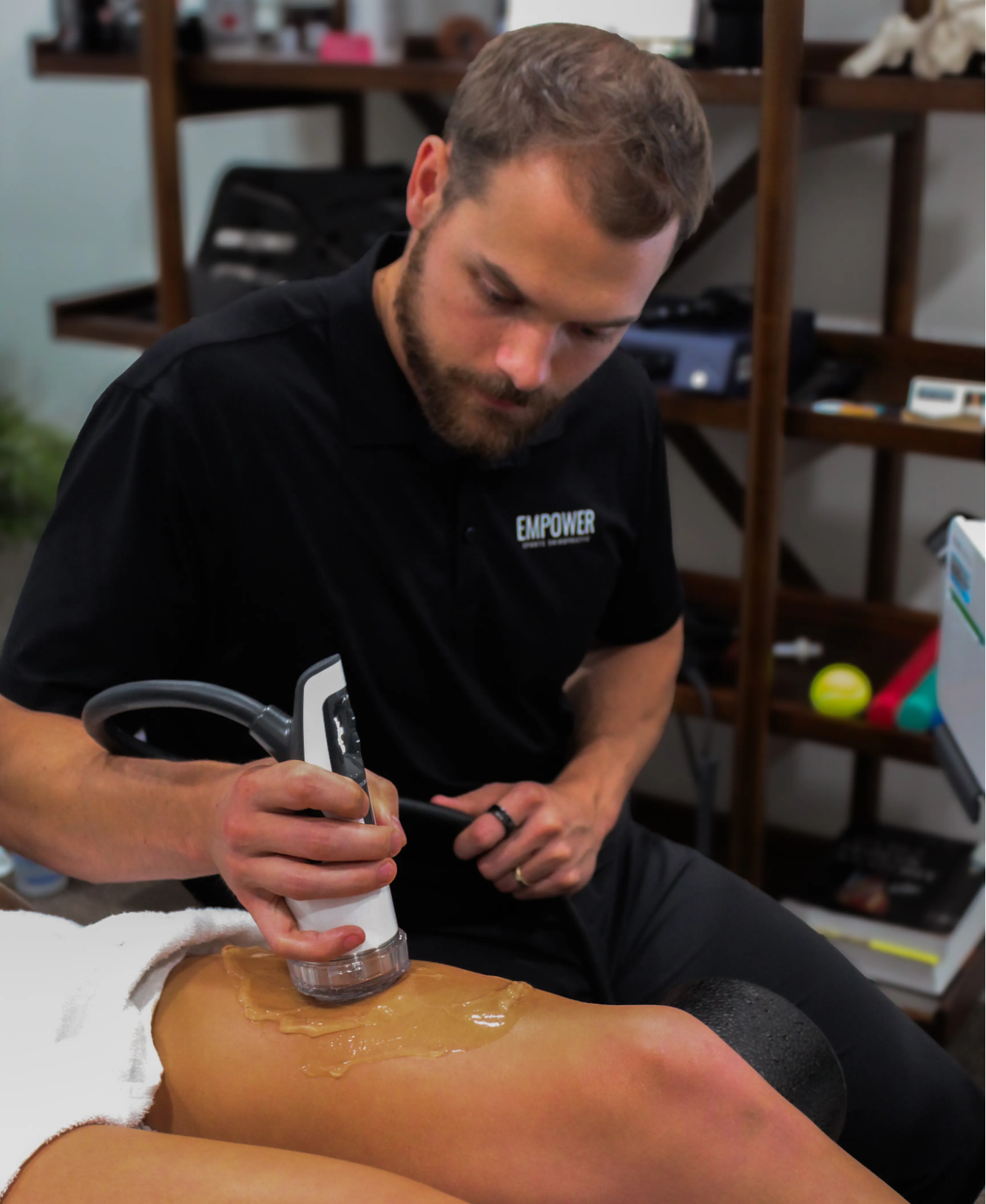
You want to get back to training, not spend another month icing a sore heel or Achilles. Shockwave therapy can help when rest and stretching haven't, but clinics don't all deliver it the same way. If you just typed "softwave therapy near me" into Google, these seven questions from Empower Sports Chiropractic will help you choose a clinic with confidence. They're the same questions I'd want answered for the athletes I treat as team chiropractor for Georgia Tech Football. Use the scorecard below when you call around.
TL;DR: What to ask before you book shockwave therapy
- Ask for a hands-on diagnosis first, and ask what the device is FDA cleared or approved for.
- Ask what type of shockwave the machine makes and what you'll do between sessions to rebuild the tissue.
- Ask who shouldn't be treated and what the full course costs, since most major insurers won't pay for it.
The 7 questions at a glance
If a clinic gives you mostly red-flag answers, keep looking.
| Question to ask | Green flag | Red flag |
|---|---|---|
| 1. Will you diagnose my pain before treating it? | A clinician examines you and re-tests you along the way | You're booked before anyone examines you |
| 2. Has the device been tested on my injury? | They tell you what it's FDA cleared or approved for | "It's approved for everything" |
| 3. Does it reach as deep as my injury? | They name the shockwave type and why it fits | "It's all the same thing" |
| 4. Is it SoftWave or another brand? | They name the device and explain it plainly | They sell the logo, not the plan |
| 5. Will I get a rehab plan, and can I keep training? | A home program that progresses as you improve | "Just come back next week" |
| 6. Who shouldn't get shockwave therapy? | They ask about growth plates, medications, implants, and pregnancy | No health questions before treatment |
| 7. How much does it cost, and will insurance pay? | A full-plan price and a clear HSA/FSA answer | Per-session pricing, with add-ons later |
1. Will someone diagnose your pain before treating it?
They should. Heel and tendon pain can come from problems shockwave isn't built to fix, like an irritated nerve, so a hands-on exam comes first.
Research backs that up. In the FDA trial for the device we use, patients needed chronic plantar fasciitis (heel pain) confirmed by a clinical exam. People with nerve problems such as tarsal tunnel syndrome were left out. That's why every plan at Empower starts with a 45-minute one-on-one evaluation. It's the same exam-first approach I use with my Georgia Tech athletes.
Ask the clinic: "Who examines me, and will that same person re-test me between sessions?"
2. Has the device been tested on your injury, and how well did it work?

Ask what the device is FDA cleared or approved for, then ask what the research shows for your injury. Those are two different questions.
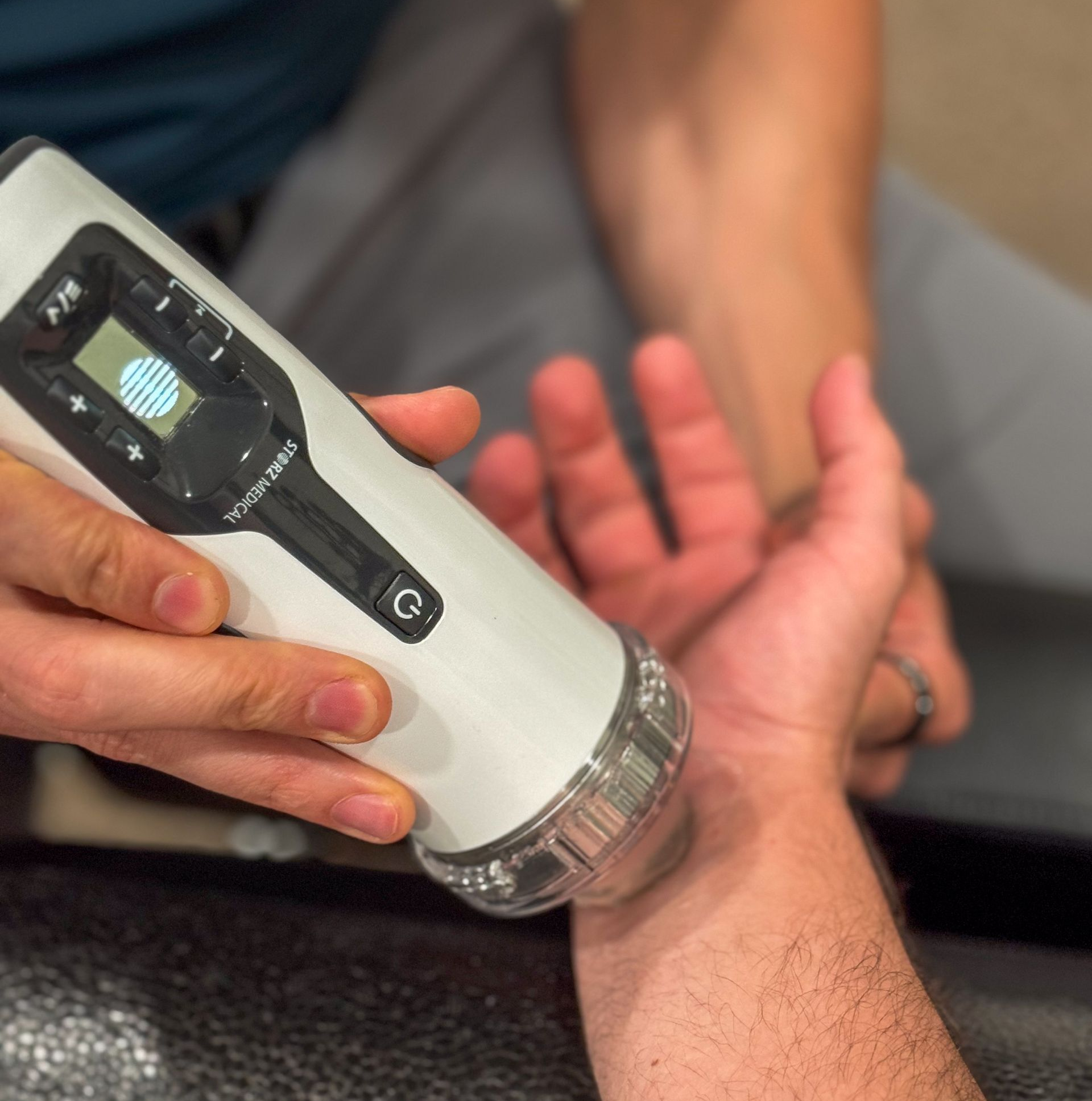
Here's what that looks like for the device we use, the Storz Medical Duolith SD1. The
FDA approved it on January 8, 2016, for heel pain from chronic plantar fasciitis in adults who'd already tried at least six months of non-surgical treatment. In the trial behind that approval, about 250 patients got three sessions roughly a week apart. At three months, 54.4% of treated patients hit the study's success mark, compared with 37.2% on placebo. The FDA's summary calls that slightly better than placebo.
That's a useful reality check for any shockwave device. Expect a real edge, not a sure thing. The trial measured success three months after the last session, so judge your results over weeks, not by how you feel the next morning.
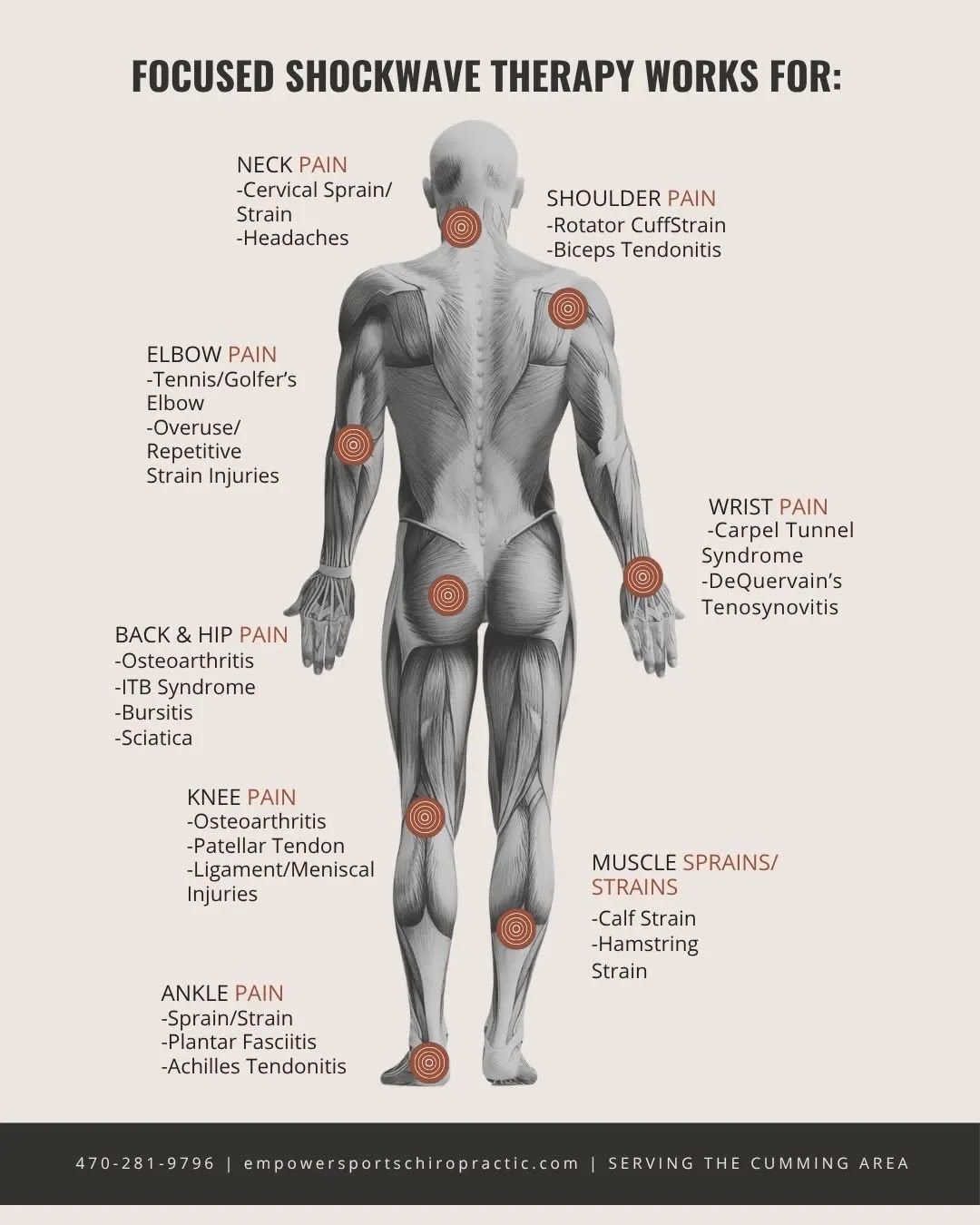
I also use shockwave for other injuries when the research supports it, and I'll tell you plainly whether your injury falls inside or outside the FDA-approved use.
Ask the clinic: "What's your device cleared or approved for, and what does the research say about my injury?"
3. Does the machine reach as deep as your injury?
Ask what type of shockwave the device makes. Focused shockwaves gather energy at a set depth below the skin. Radial devices spread energy from the skin's surface, and it fades as it travels deeper.
Neither type is automatically better. It depends on where your injury is and what the research shows for it. A
2017 report from Washington State's health technology program sorted the research by type and by injury:
| Focused shockwave | Radial pressure waves | |
|---|---|---|
| How the energy travels | Gathers at a set depth | Spreads from the skin and fades with depth |
| Heel pain (plantar fasciitis) | Strong evidence of short-term relief for first-step morning pain | Moderate evidence of short-term improvement |
| Tennis elbow | Moderate evidence of short-term benefit | Not enough evidence yet |
| Achilles pain | Limited evidence of short-term relief | Limited evidence that it adds to calf-strengthening exercises |
The Duolith we use has both focused and radial modes, so I match the mode to where your injury sits.
Ask the clinic: "Which type does your device make, and why is it right for my injury?"
4. Is it SoftWave or another brand, and does that matter?
SoftWave is one company's brand of shockwave device. If you searched for it, you're probably looking for shockwave therapy in general, and the brand matters less than the answers to the other six questions.
If you searched "softwave therapy near me," you've seen some clinics use the name and others don't. SoftWave Tissue Regeneration Technologies, a Georgia-based company,
describes its patented technology as unfocused shockwave. That means it doesn't fit either column in the table above. The Washington report only sorted research into focused and radial, so it doesn't show how unfocused systems compare.
At Empower, we use the Storz Medical Duolith SD1, which offers both focused and radial modes.
Whatever logo is on the machine, ask the other six questions. That includes asking us.
5. Will you get a rehab plan, and can you keep training?
You should leave with a home exercise plan. In most studies of athletes, people were allowed to keep training during treatment.
My approach is simple. Shockwave may ease pain, but the strength work you do between visits is what rebuilds the tissue. One trial points the same way. In an Achilles study from the Washington report, one group added radial shockwave to calf-strengthening exercises. They scored better on short-term pain and function than people who did the exercises alone.
A
2024 review in the British Journal of Sports Medicine covered 56 studies and 1,874 athletes and active people. It found shockwaves may help on its own for plantar fasciitis, tennis elbow, and hamstring tendon pain, and alongside exercise for shin splints. In most of those studies, athletes were allowed to keep training, and side effects were minimal.
Ask the clinic: "What's my home program, and how will you progress?"
6. Who shouldn't get shockwave therapy?
Skip shockwave if any of the situations below apply, and expect a good clinic to check for them before your first session. The FDA labeling for the device we use lists five:
- Over or near growth plates that haven't closed
- Cancer in or near the treatment area
- Infection in the treatment area
- A bleeding disorder or blood-thinning medication
- A prosthetic implant in the treatment area
Its trial also excluded pregnant patients and people with pacemakers, defibrillators, insulin pumps, or nerve stimulators. The growth-plate rule matters for parents, too. A 14-year-old pitcher with elbow pain needs a different conversation than a 40-year-old runner with heel pain.
Does it hurt? Some. In that trial, pain or discomfort during treatment was the most common side effect, and almost every patient was treated without numbing medicine. Serious problems are rare. Across the trials in the Washington report, 17 serious or potentially serious events occurred among 3,197 shockwave patients, about half a percent. For what athletes usually feel afterward, read our
guide to shockwave therapy side effects for athletes.
Bring your medication list and health history to your evaluation, and we'll go through it together.
7. How much does it cost, and will insurance pay?
Most major insurers don't cover shockwave for muscle and tendon pain, so plan to pay out of pocket. Ask for the full-course price before you start.
As of October 2026,
Aetna covers it only for one narrow type of calcified shoulder tendon problem.
Cigna treats it as experimental for any muscle, bone, or joint condition. When you call, ask how many sessions the plan includes, whether exams and re-tests are in the price, and whether you can use HSA or FSA funds.
Is it worth it? That depends on how long you've been hurting and what you've already tried. For the device we use, the FDA-approved use for plantar fasciitis is for people who've tried six months of other treatment first. That's a reasonable benchmark. If you've hit that point, let's talk through your options.
How Empower answers these questions
We start with a full evaluation, treat with a device that has an FDA approval, and build strength work into every plan.
I built our approach to
shockwave therapy in Cumming, GA, around these seven questions.
| Question | Our answer |
|---|---|
| Diagnosis first? | Yes. Every plan starts with a 45-minute one-on-one evaluation. Follow-ups run 30 to 45 minutes, so there's time to treat and re-test. |
| Device and FDA status? | Storz Medical Duolith SD1, FDA approved for chronic plantar fasciitis heel pain |
| Shockwave type? | Focused and radial modes |
| Rehab plan? | Strength and mobility work built into your plan and progressed as you improve |
| Screening? | We review your health history and medications at your evaluation |
| Cost? | Cash-based, with pricing shared up front. HSA and FSA cards are welcome. |
Make the call before you make the appointment
Shockwave can be a smart next step when months of rest and stretching haven't fixed the problem. The clinic behind the device decides how much it helps, so run every clinic through these seven questions, including us. When you're ready to hear my answers in person, book a shockwave evaluation at Empower Sports Chiropractic, 407 E Maple St, Ste 107, in Cumming.
Move well. Be strong. Live long.
This article is for general education and isn't a substitute for an individual medical evaluation. SoftWave is a registered trademark of SoftWave Tissue Regeneration Technologies, LLC.
About the author

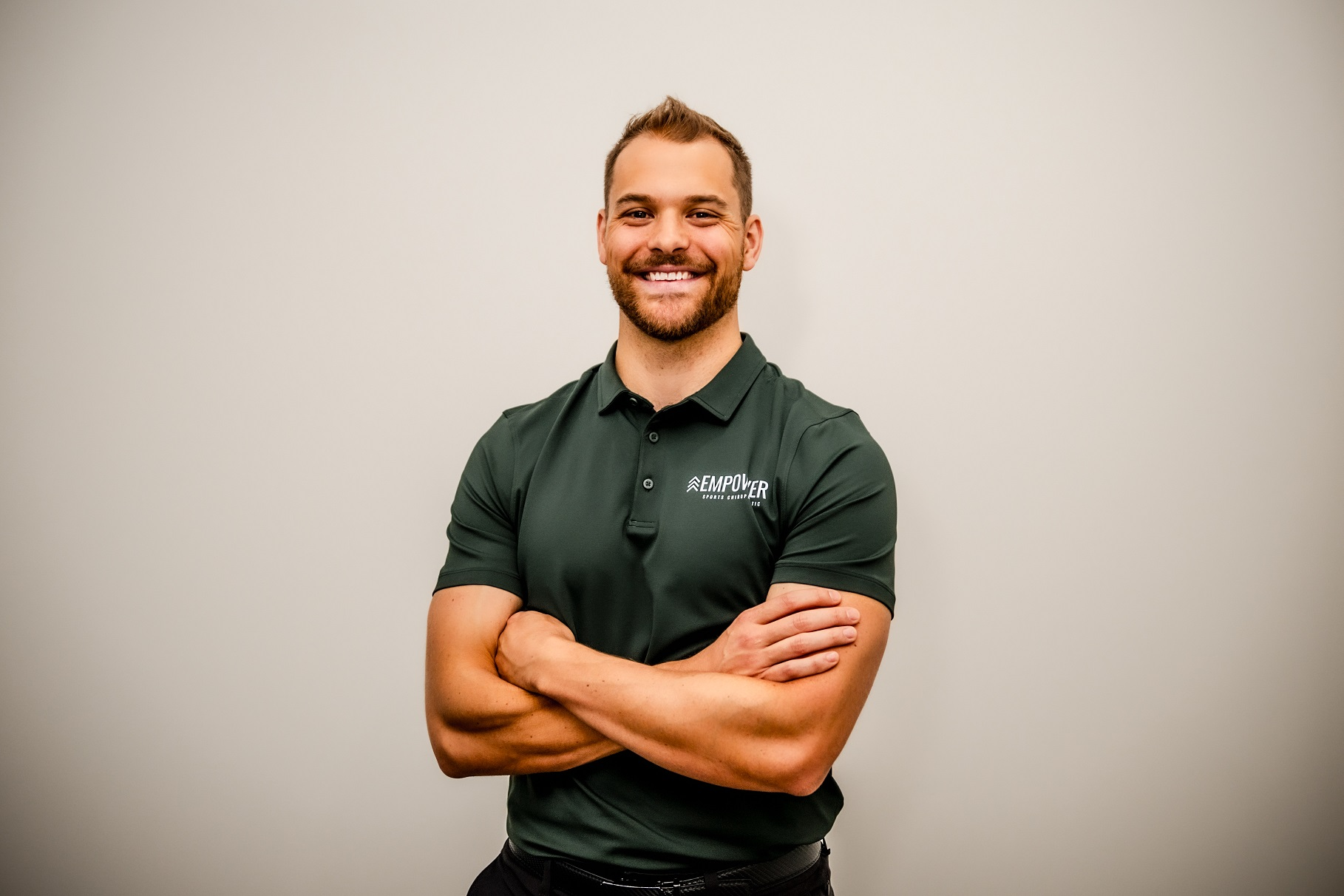
Dr. Jared Croskey, DC, ATC, leads Empower Sports Chiropractic in Cumming and serves as team chiropractor for Georgia Tech Football. He's a Doctor of Chiropractic and Certified Athletic Trainer with more than 12 years of experience treating sports injuries without surgery. He built the clinic around longer one-on-one sessions that combine hands-on care, strength work, and modalities like shockwave therapy for athletes and active adults across North Metro Atlanta.
Get Back in the Game, Pain-Free
Recover faster and move better with expert sports chiropractic care.
Pro Tips for Athletes & Active Lifestyles
Stay ahead with chiropractic insights, recovery strategies, and performance hacks.
Contact Us
We will get back to you as soon as possible.
Please try again later.
SHARE THIS