The real difference between shockwave TRT and traditional shockwave (and why it matters for your recovery)
By Dr. Jared Croskey • October 27, 2026

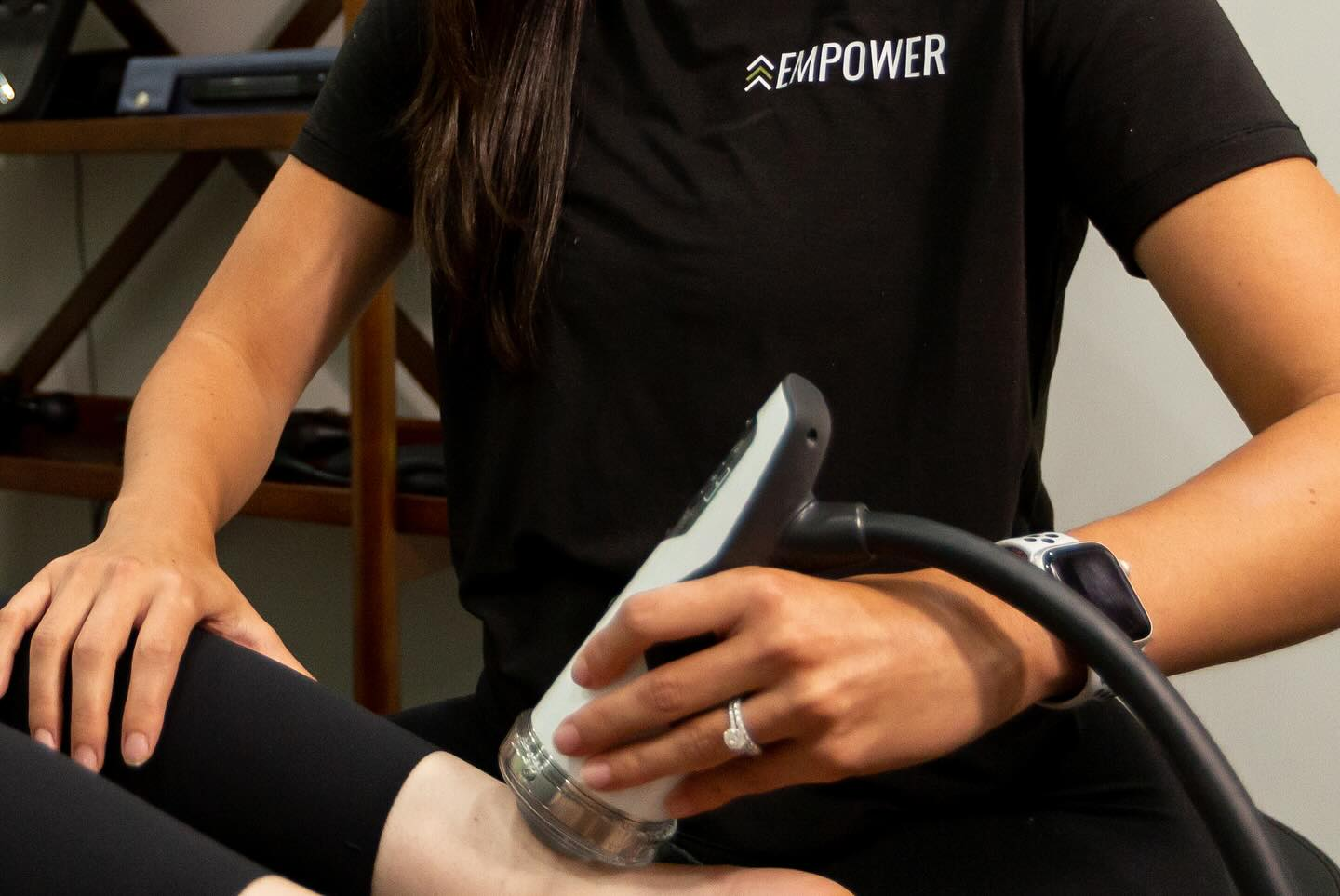
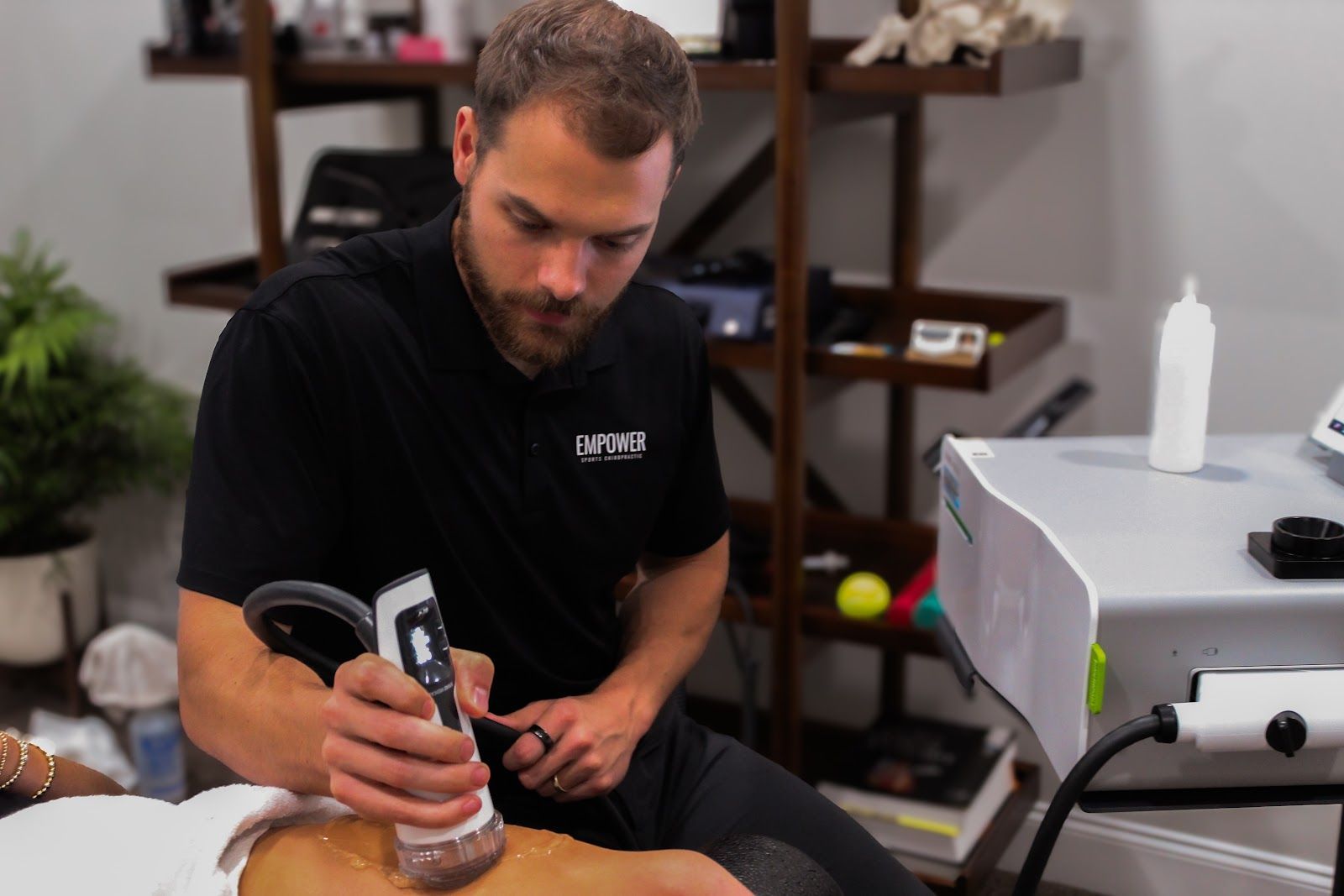
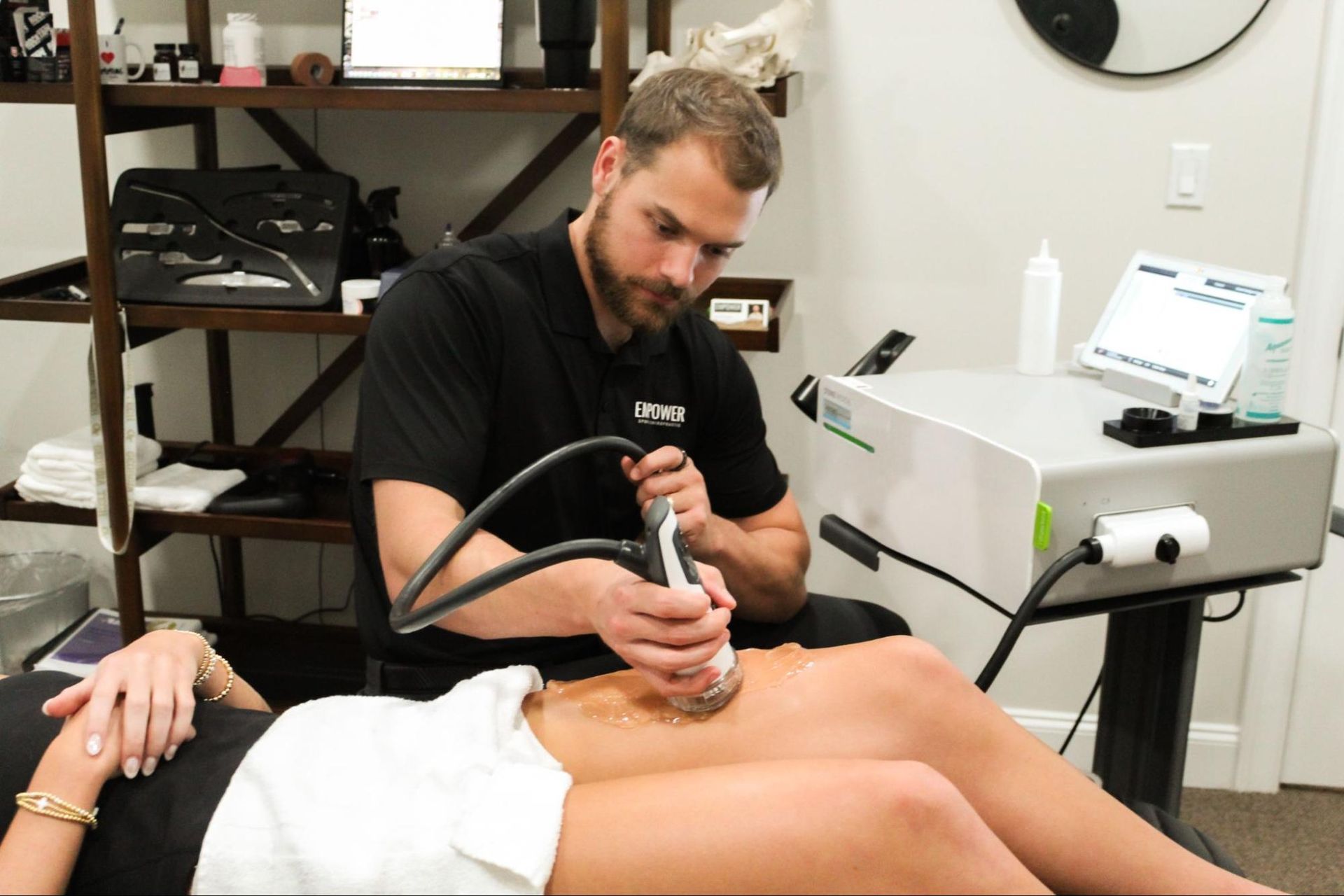
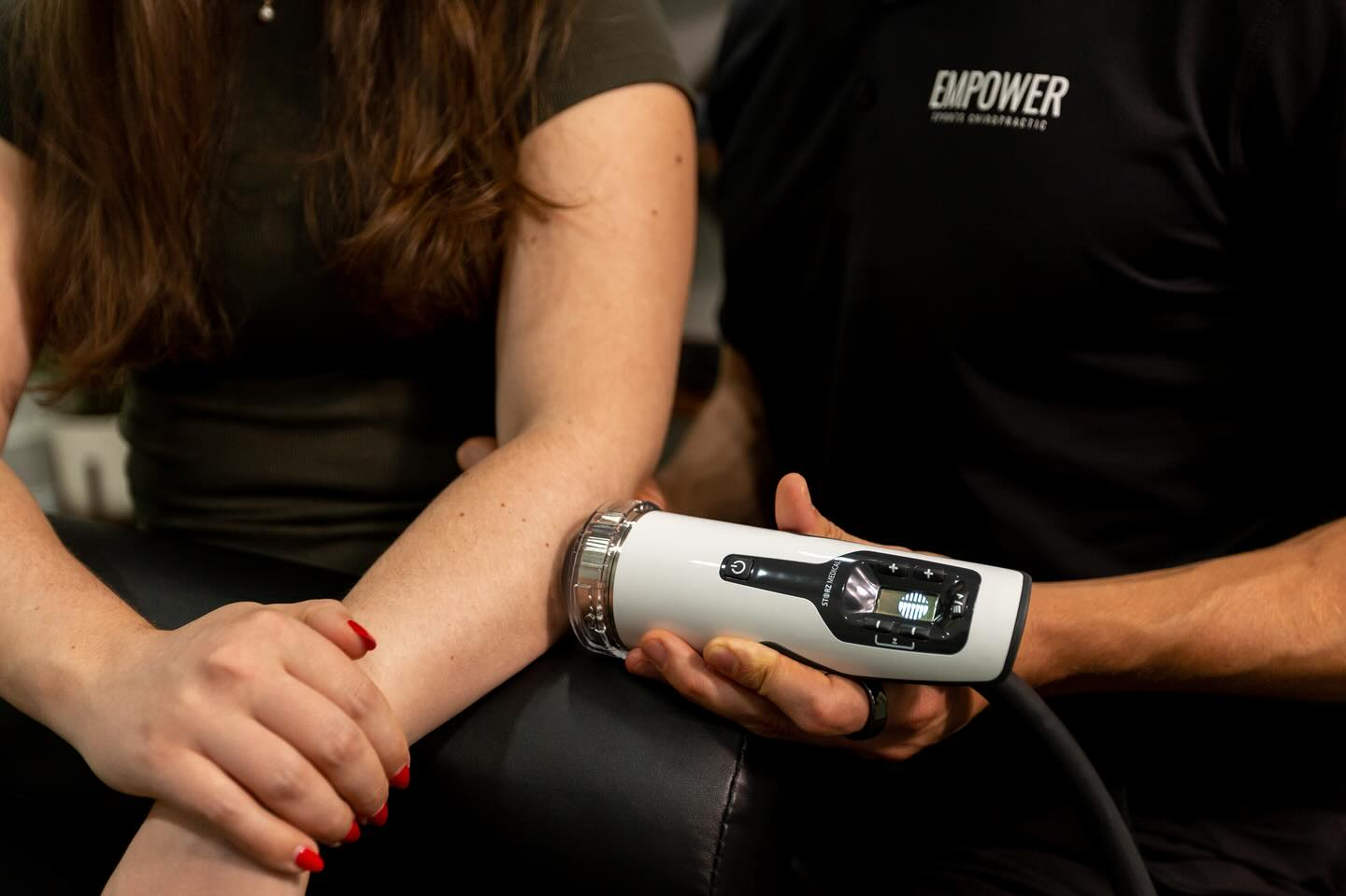
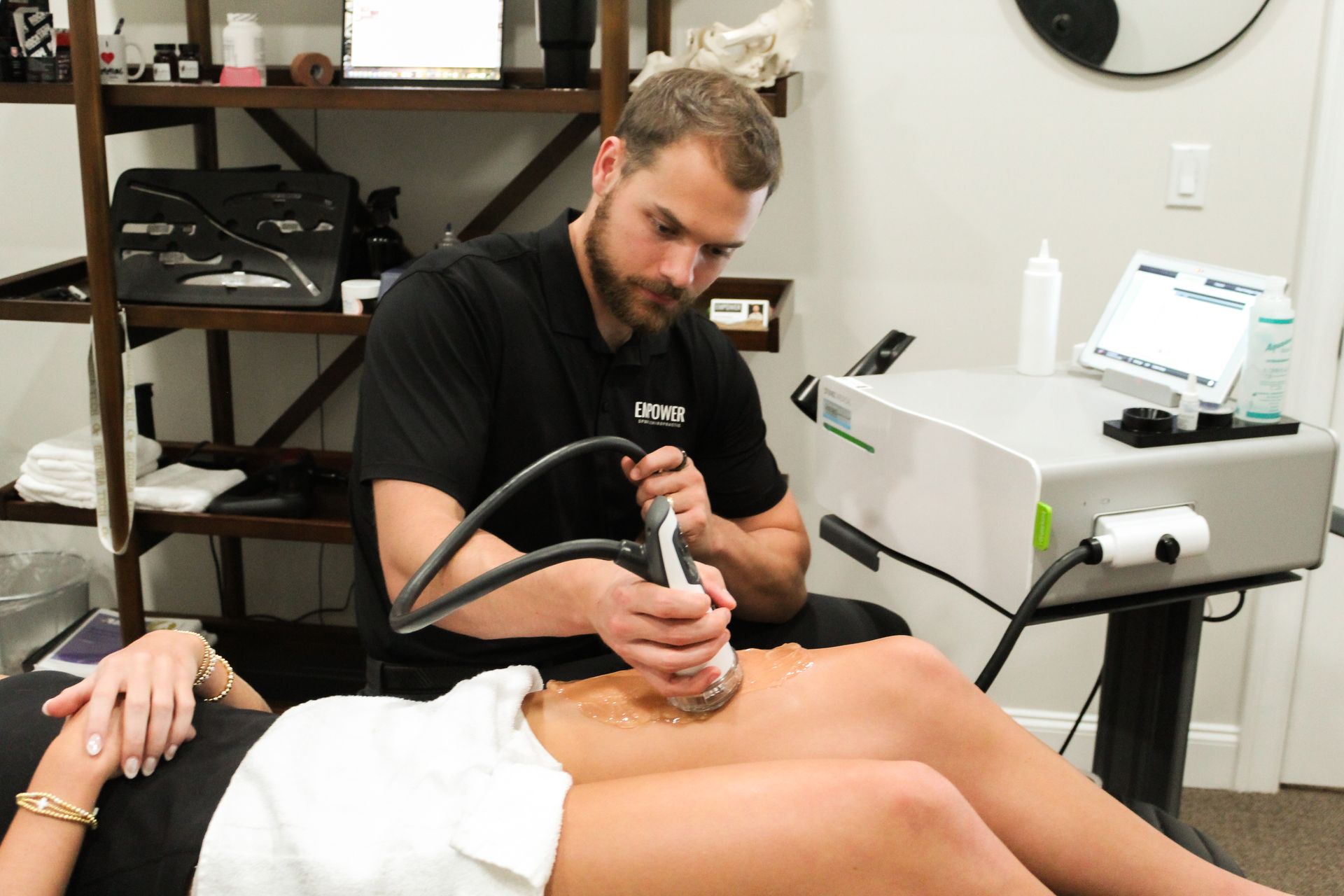
If you're researching regenerative soundwave therapy for a stubborn tendon or joint injury, you've likely noticed that different clinics use completely different devices under the broad label of "shockwave." But there is a massive gap between superficial mechanical percussion and true therapeutic acoustic sound waves. In this guide, you will learn the critical differences in wave depth, healing mechanisms, and patient comfort separating shockwave TRT (Tissue Regenerative Therapy) from conventional devices, and how choosing clinical shockwave therapy in Cumming leads directly to genuine cellular recovery.
TL;DR: Quick summary and clinical takeaways
- Wave physics matter: shockwave TRT generates true focused hydro-acoustic shockwaves in water, whereas traditional "radial shockwave" devices produce superficial pneumatic pressure waves.
- Penetration depth: shockwave pulses reach up to 10–12 cm deep with a wide treatment zone; radial pressure waves disperse within 1–3 cm.
- Patient comfort: Because shockwave uses a true acoustic wave, it stimulates cellular healing with significantly less surface skin discomfort than mechanical radial pounders.
- Biological cascade: shockwave activates dormant resident stem cells, down-regulates substance P pain signals, and stimulates microvascular blood flow via eNOS and VEGF signaling.
- Comprehensive integration: At our Cumming clinic, acoustic therapy integrates directly with 1:1 sports chiropractic care, active mobility drills, and progressive loading.
How acoustic wave technology works

The primary difference between shockwave TRT and traditional shockwave systems comes down to how energy travels through your tissue.
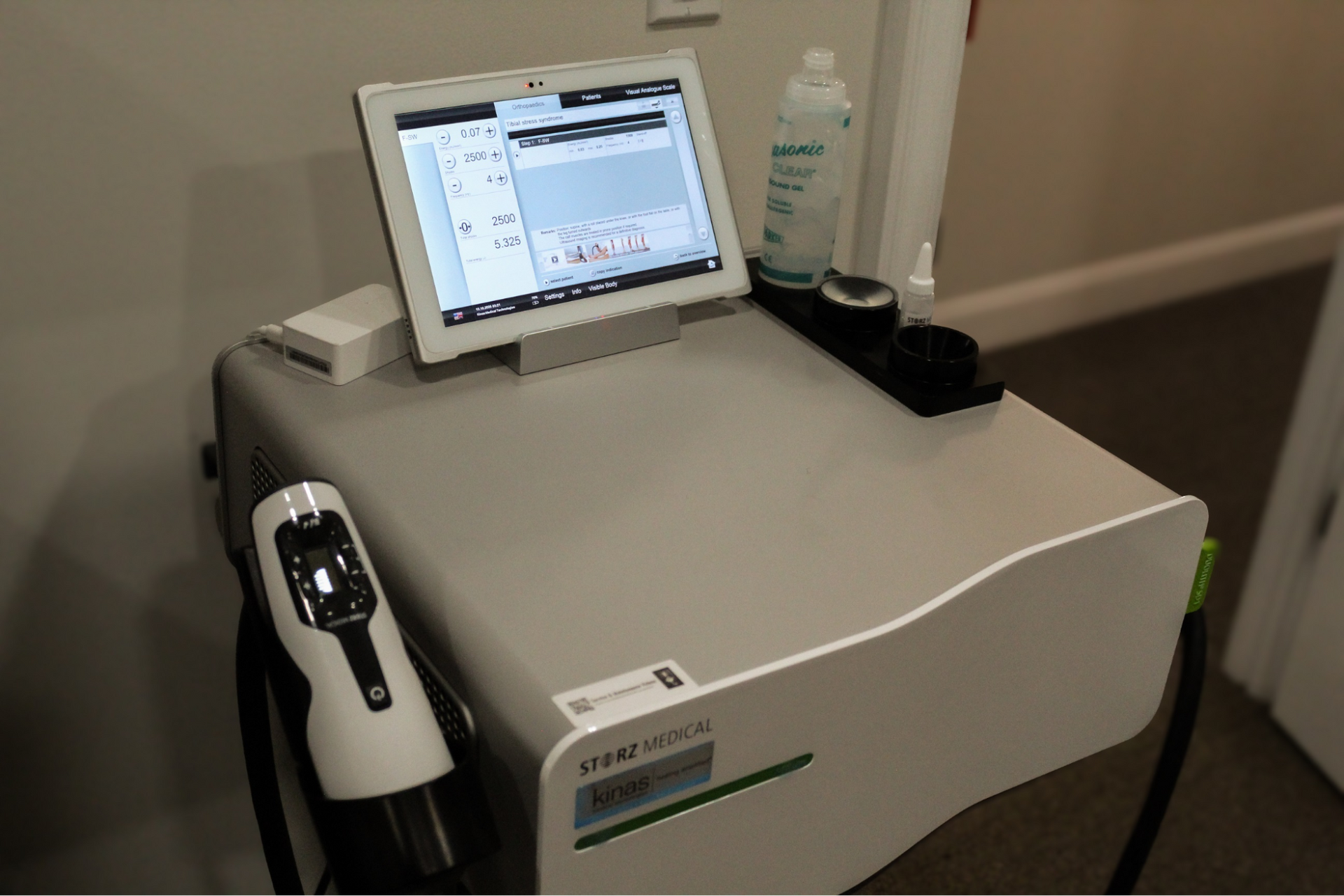
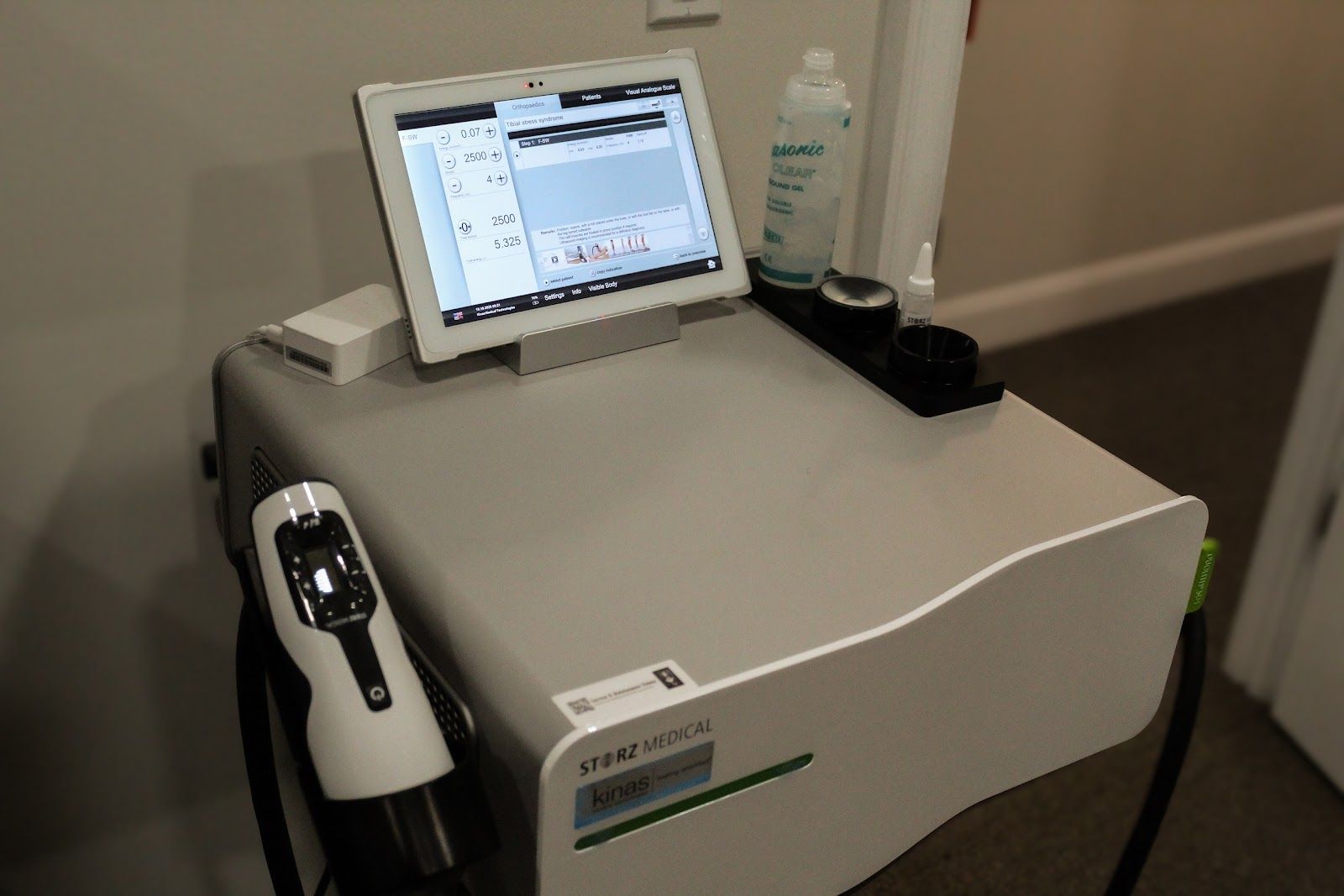
Most generic clinics use Radial Pressure Wave (RPW) devices. At Empower Sports Chiropractic, we utilize patented focused hydro-acoustic shockwave TRT.
Comparison of shockwave delivery types
| Delivery method | How energy is generated | Where it acts in your body |
|---|---|---|
| Radial pressure waves (pneumatic) | Mechanical projectile driven by compressed air | Pounding impact on skin surface; fades before reaching deep tissues |
| Shockwave TRT (hydro-acoustic) | High-energy sound wave traveling through fluid | Deep, wide acoustic spread that stimulates cellular repair up to 12 cm |
1. Radial pressure waves (pneumatic massagers)
Radial devices aren't technically true shockwaves. They rely on an air compressor that fires a small metal projectile inside a handpiece against a metal tip.
When the projectile strikes the tip, it sends a mechanical vibration into your skin. The energy peaks right at the skin surface and quickly fades—acting like an aggressive massage gun that cannot reach deeper tendons or joint capsules.
2. Shockwave TRT (focused hydro-acoustic waves)
Shockwave TRT generates a true acoustic sound wave that travels at supersonic speeds through water and soft tissue.
A patented reflector shapes this sound into a wide, focused hydro-acoustic beam. This allows therapeutic energy to reach deep into muscles, tendons, and joint capsules without concentrating painful peak pressure on your skin.
Shockwave TRT vs traditional radial shockwave: Side-by-side comparison

| Feature / Benefit | Shockwave TRT (focused hydro-acoustic) | Radial pressure waves (ballistic) |
|---|---|---|
| True acoustic shockwave | Yes (Supersonic focused hydro-acoustic sound wave) | No (Subsonic mechanical vibration) |
| Tissue penetration depth | Up to 10–12 cm (Reaches deep joints & tendons) | 1–3 cm (Superficial soft tissue only) |
| Treatment zone area | Wide coverage swath (7 cm wide) | Small circular tip (1–2 cm) |
| Patient comfort during care | Moderate cellular ache over injured spots | High surface skin discomfort and bruising |
| Microvascular blood flow | Deep capillary stimulation across entire muscle groups | Limited surface friction |
| Stem cell recruitment | Proven cellular signaling via eNOS and VEGF | Limited to local surface response |
| Primary clinical role | True tissue regeneration & chronic tendon repair | Temporary muscle relaxation & surface pain relief |
How shockwave TRT stimulates cellular healing
Shockwave TRT initiates a direct cascade of cellular repair that turns dormant healing mechanisms back on.
When the acoustic wave passes through compromised tissue, gentle pressure waves stretch cell membranes, triggering vital biological signals:
- Endothelial nitric oxide synthase (eNOS): Shockwave immediately stimulates eNOS production, which opens up microvessels and increases local blood supply.
- Vascular endothelial growth factor (VEGF): Elevated VEGF signals your body to build new capillary networks in chronically damaged tendons.
- Mesenchymal stem cell migration: The acoustic wave stimulates growth factors that recruit your body's resident repair cells to the injured area, laying down healthy new collagen fibers.
- Substance P down-regulation: Acoustic waves deplete substance P, a major neurotransmitter responsible for transmitting chronic pain signals, providing immediate pain relief and long-term desensitization.
For patients seeking comprehensive care, learning more about our dedicated shockwave therapy in Cumming provides insight into how we use this technology to treat active professionals, high school athletes, and endurance runners.
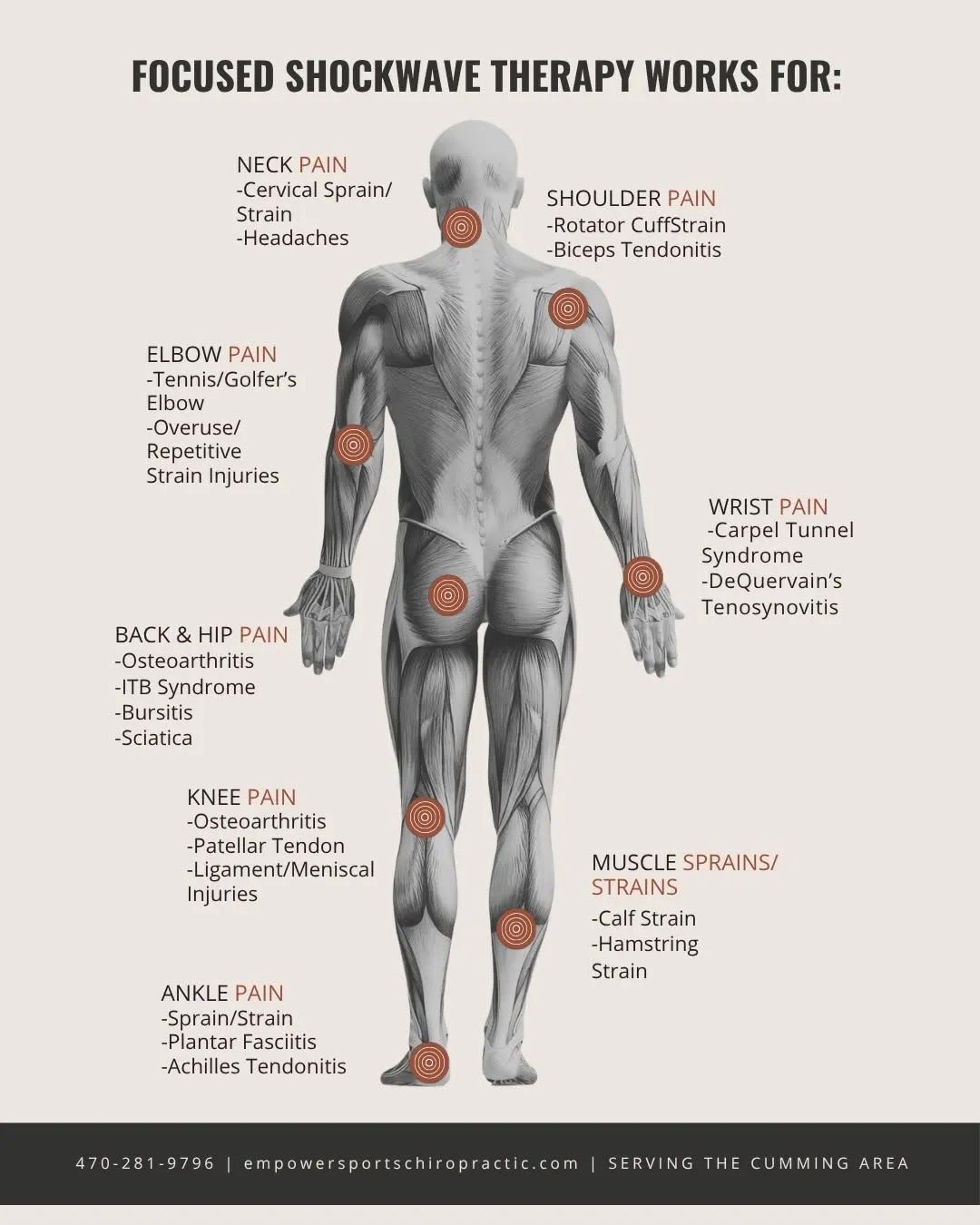
Clinical conditions: Where shockwave TRT excels
Because shockwave penetrates up to 12 cm with a broad coverage zone, it provides proven results across a wide range of athletic and overuse injuries.
Primary conditions treated with shockwave therapy
- Plantar fasciitis and heel spurs: Softens dense scar tissue and stimulates microcirculation at the heel bone attachment without causing surface bruising.
- Rotator cuff tendinopathy and calcific tendinitis: Safely travels through the shoulder musculature to reach deep supraspinatus tendons, helping break up calcifications and heal frayed fibers without cortisone injections.
- Patellar and quadriceps tendonitis: Washes over the entire knee extensor mechanism, restoring elasticity to overloaded quadriceps and patellar attachments.
- Greater trochanteric hip bursitis: Reaches deep fascial layers and gluteal tendon attachments that surface massagers cannot reach.
- Achilles tendinopathy and insertional pain: Restores blood flow to the lower tendon watershed zone, accelerating cellular turnover.
- Post-surgical scar tissue and adhesions: Restores mobility to restricted connective tissues while promoting organized collagen remodeling.
Why Empower Sports Chiropractic chooses shockwave TRT

Many clinics invest in entry-level pneumatic radial units because they are inexpensive. However, radial devices cannot reach deep hip joints, spinal ligaments, or thick tendon insertions with therapeutic energy.
At Empower Sports Chiropractic in Cumming, GA, we chose the FDA-cleared shockwave TRT platform for three clinical reasons:
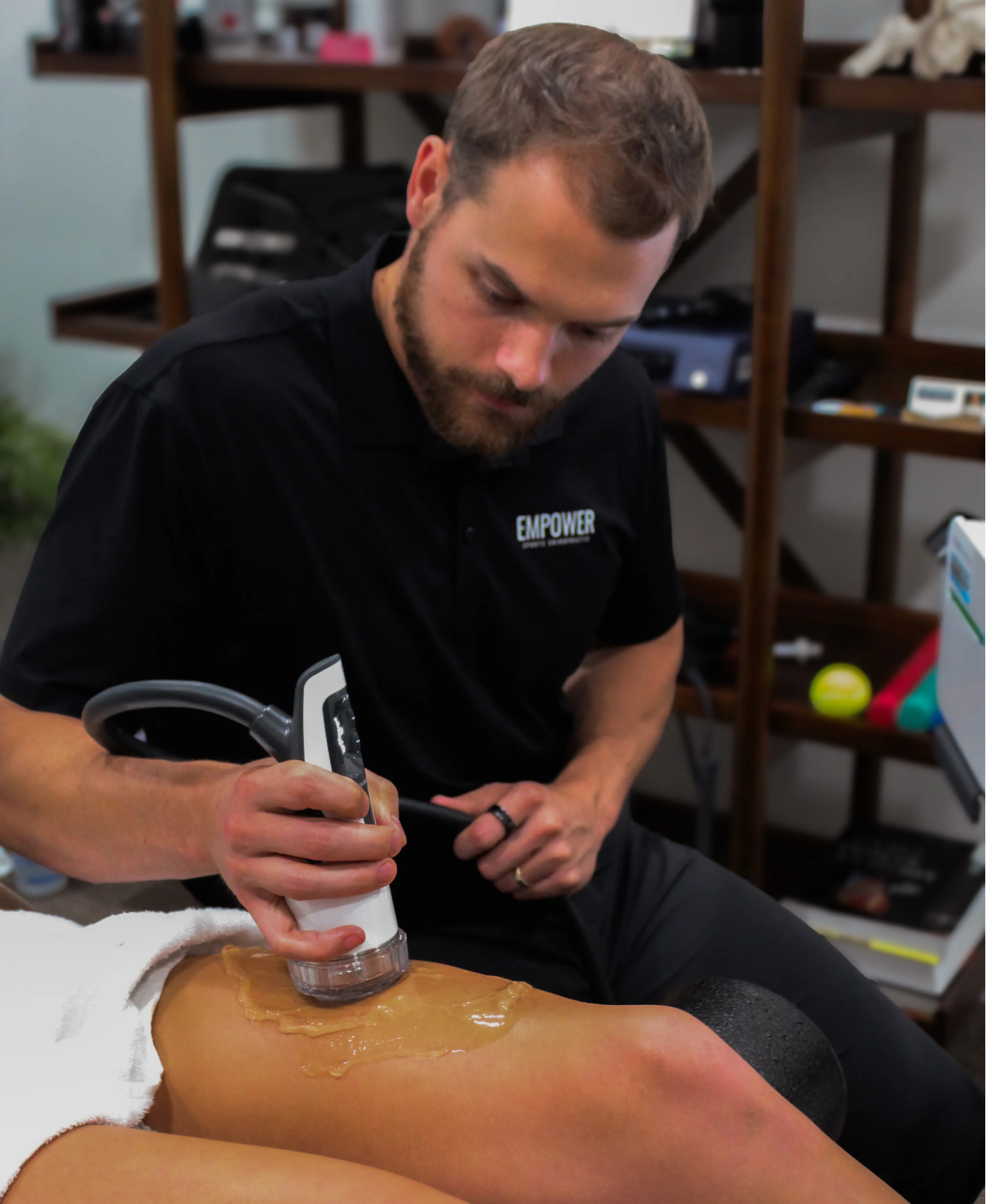
- Diagnostic bio-feedback: Shockwave acts as a precise diagnostic tool. As the applicator glides over healthy tissue, you'll barely feel a thing. The moment it passes over inflamed, damaged tissue, you feel a distinct biological feedback ache. This allows us to map the true source of your pain with pinpoint precision.
- True cellular remodeling: We prioritize biological tissue quality and lasting structural integrity. Shockwave's ability to trigger blood flow and stem cell recruitment aligns directly with our evidence-based, movement-first philosophy.
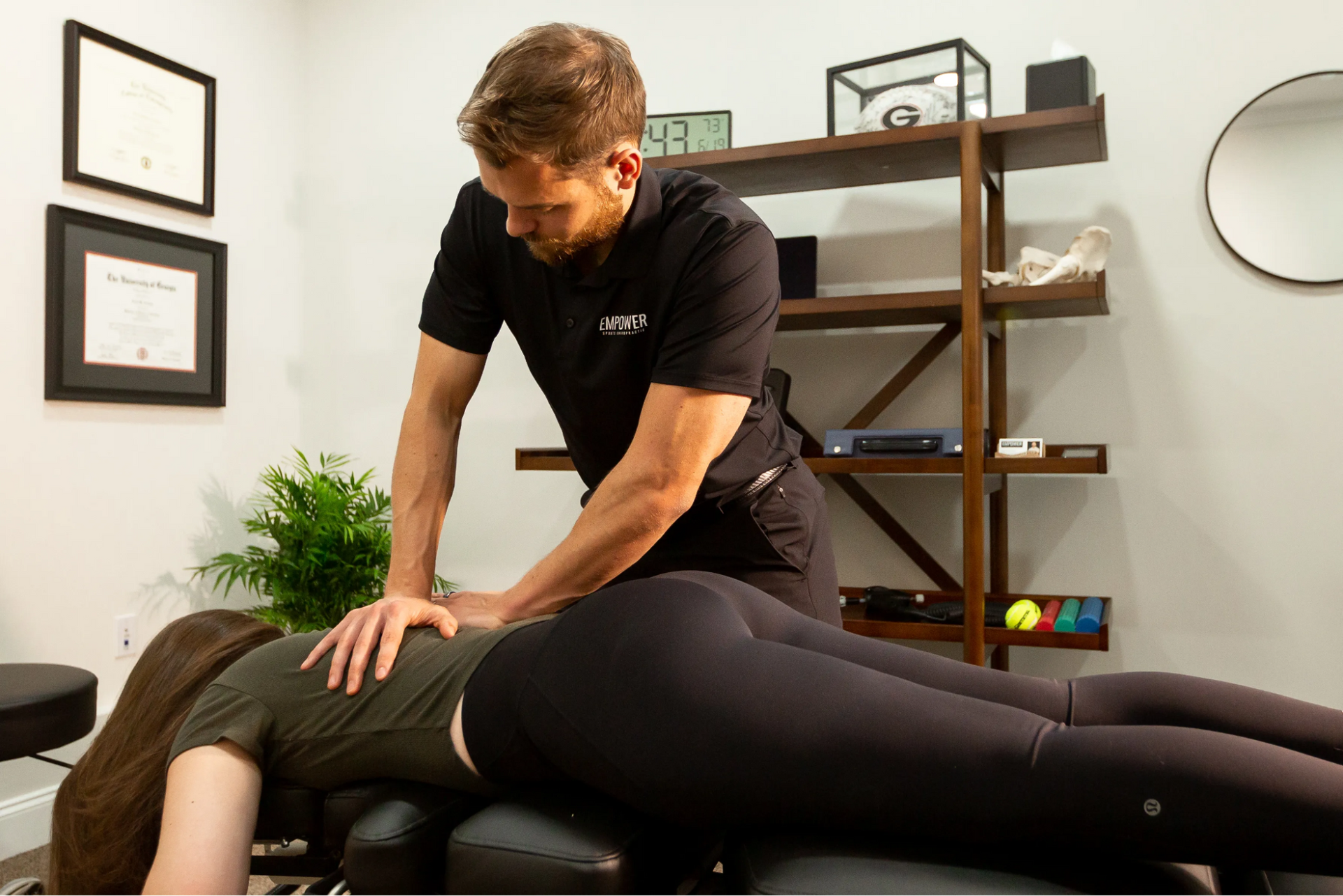
- Seamless integration with sports performance care: We pair every shockwave session with functional joint adjustments, soft-tissue mobilization, and progressive loading exercises to ensure the newly repaired tissue handles real-world athletic demands.
To see how shockwave integrates with other modalities like dry needling or IASTM, explore our sports rehabilitation and chiropractic blog.
What to expect during your evaluation in Cumming

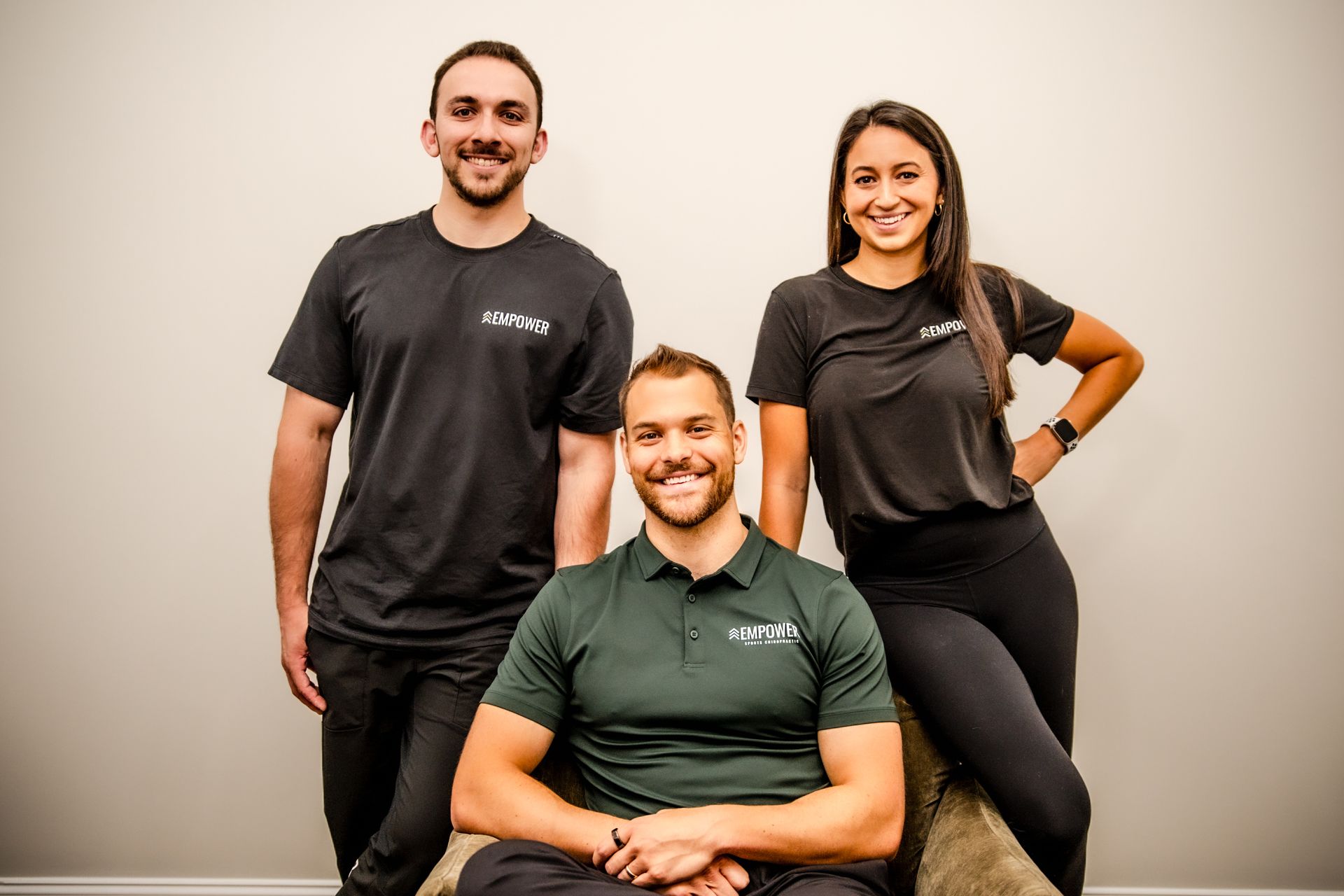
Your journey starts with a comprehensive 45-minute examination led by Dr. Jared Croskey. We test your functional movement patterns, joint biomechanics, and soft-tissue mobility to confirm whether acoustic shockwave therapy fits your specific recovery goals.
- Session duration: A standard shockwave session takes between 10 and 20 minutes.
- Sensation: You will feel a pulsing sensation. Over healthy tissue, it feels like light vibration; over injured tissue, it creates a dull, noticeable ache that subsides immediately when the applicator moves.
- Zero downtime: You can drive home or return to work immediately after your session.
- Treatment plan: Most chronic conditions require 4 to 8 sessions scheduled once per week to complete the biological tissue regeneration cycle.
About the author

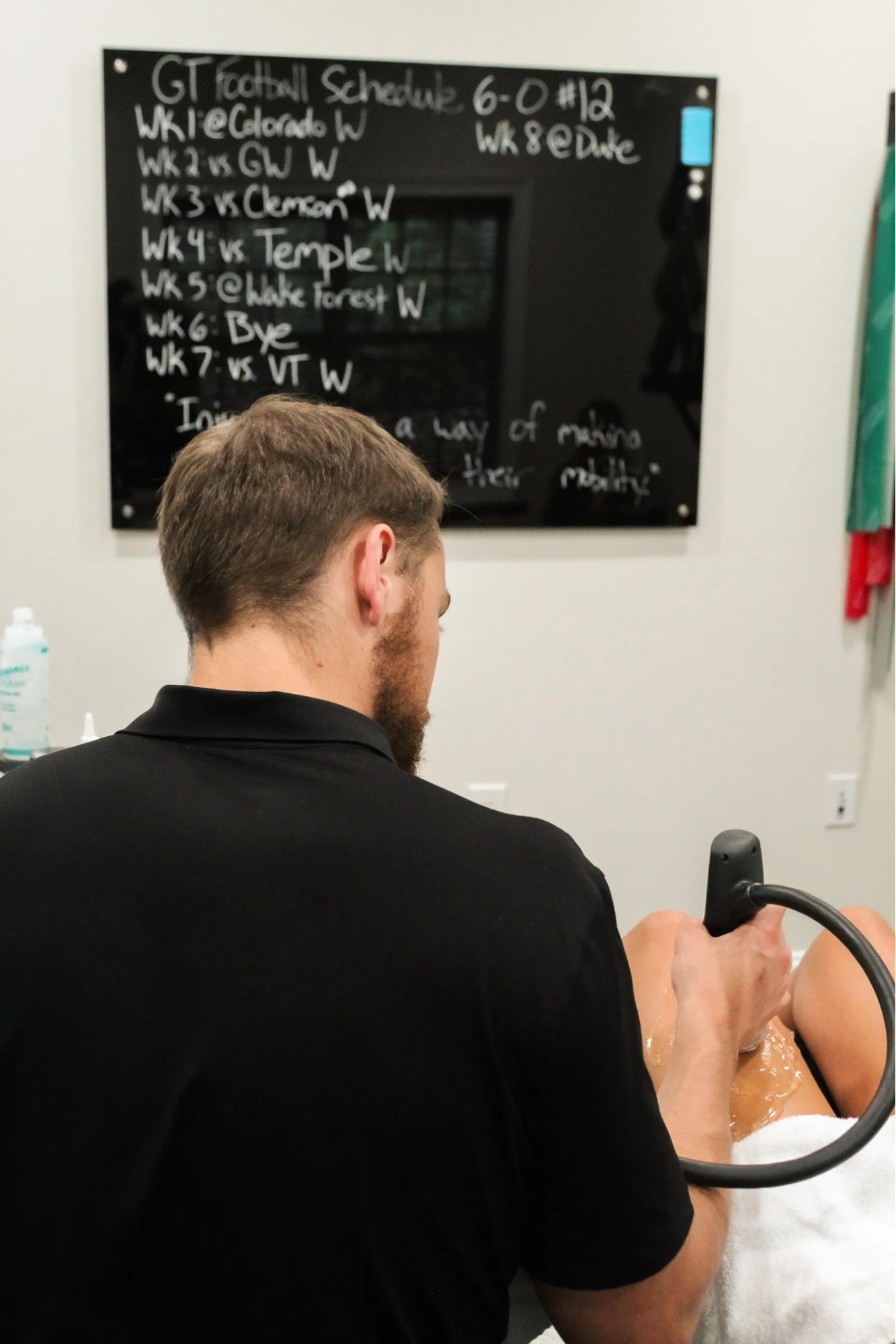
Dr. Jared Croskey, DC, ATC, GTS, is the founder of Empower Sports Chiropractic in Cumming, GA, and serves as the Team Chiropractor for Georgia Tech Football. Dr. Croskey holds dual credentials as a Doctor of Chiropractic and Certified Athletic Trainer, specializing in biomechanical assessment, shockwave acoustic therapy, dry needling, and high-performance athletic rehabilitation.
Get Back in the Game, Pain-Free
Recover faster and move better with expert sports chiropractic care.
Pro Tips for Athletes & Active Lifestyles
Stay ahead with chiropractic insights, recovery strategies, and performance hacks.
Contact Us
We will get back to you as soon as possible.
Please try again later.
SHARE THIS